How Swiss Regulations Shape Bonus Integration With Digital Slot Payout Mechanisms
Gisela Wolf · Oct 4, 2026

How Swiss Regulations Shape Bonus Integration With Digital Slot Payout Mechanisms
Switzerland maintains a tightly controlled gambling environment under the Federal Act on Gambling that took effect in 2019, and this framework directly governs how online platforms incorporate bonus offers into slot payout systems. Licensed operators must separate bonus funds from real-money balances in their software architecture so that every spin reflects accurate tracking of wagering requirements while the random number generator processes outcomes in real time. Regulators require transparent display of bonus terms before players activate any promotional feature, and this rule extends to automated payout calculations that prevent premature crediting of winnings derived from bonus play.
Core Rules Governing Bonus Structures
The Swiss regulatory body enforces strict conditions on bonus validity periods, contribution rates toward wagering, and maximum bet limits during bonus rounds, all of which slot systems must encode at the programming level. Data from official licensing records shows that platforms undergo annual audits to confirm their payout mechanisms correctly flag bonus-derived wins and route them through separate ledgers until release conditions are met. Those who design compliance software note that these requirements create layered protocols where each bonus type carries unique multipliers that interact with the slot's paytable without altering the underlying RTP percentage.
Operators receive approval only after demonstrating that their integration prevents players from accessing restricted features such as withdrawal requests while bonus funds remain active. Studies conducted by Swiss oversight agencies reveal consistent patterns where non-compliant bonus handling leads to license reviews, prompting developers to embed real-time compliance checks directly into the payout engine. This approach ensures that every transaction log aligns with statutory reporting obligations that cover both bonus issuance and final settlement.
Technical Implementation in Digital Slot Systems
Slot platforms licensed in Switzerland employ modular code structures that isolate bonus balances and apply automatic conversions once wagering thresholds are satisfied, and these conversions feed directly into the same payout queue used for standard deposits. Engineers configure the system to recognize Swiss-specific rules on maximum bonus values and time-bound expirations so that any unclaimed promotional credit vanishes from the player account without manual intervention. According to documentation from the Federal Act on Gambling, such automation reduces administrative errors while maintaining full audit trails that regulators can access at any moment.
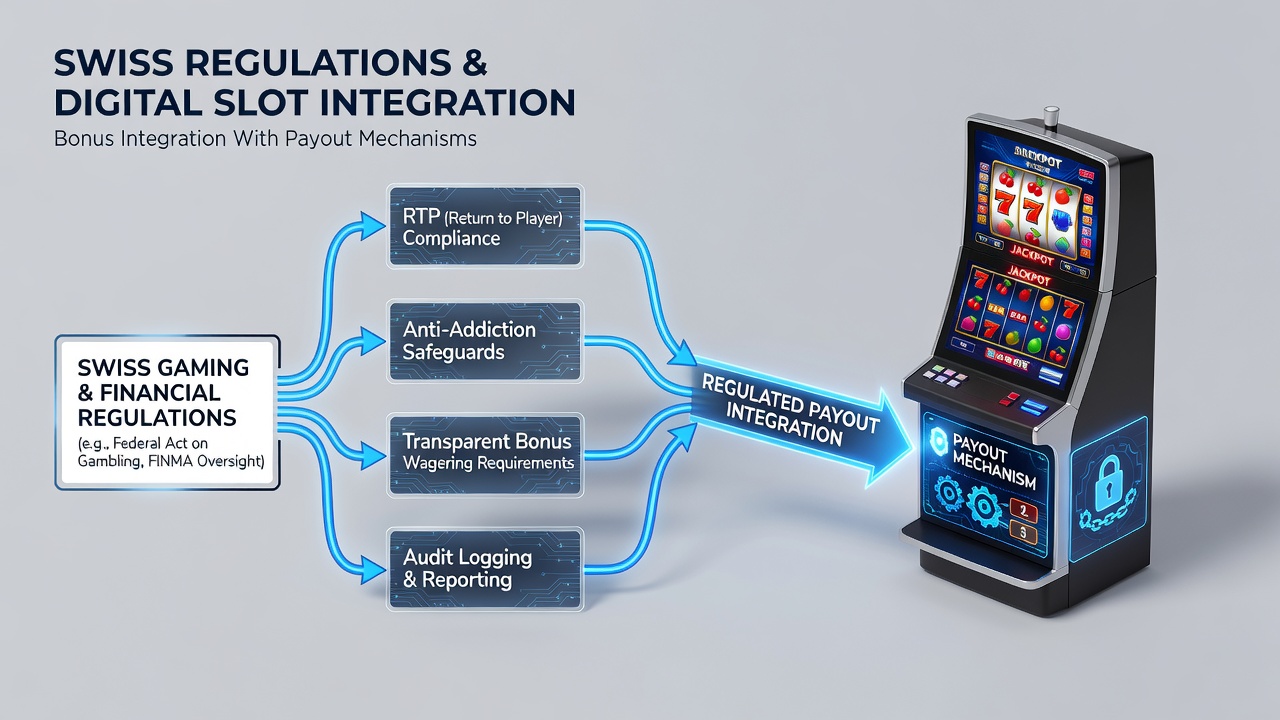
Platforms must also handle multi-currency scenarios because Swiss law permits play in CHF alongside select foreign currencies, yet bonus conversion rates require fixed calculation methods that avoid rounding discrepancies during payout. Research from European gaming technology firms indicates that these constraints have driven adoption of standardized APIs that communicate bonus status to the central payout processor in milliseconds, thereby preserving game integrity across thousands of concurrent sessions. Observers note that updates scheduled for October 2026 will introduce additional data fields for bonus source tracking, further tightening integration between promotional offers and final disbursement records.
Compliance Monitoring and Reporting Obligations
Monthly submission of transaction data to Swiss authorities includes detailed breakdowns of bonus usage, win rates, and payout volumes, allowing regulators to identify anomalies that might indicate improper system configuration. Licensed entities employ third-party testing laboratories to certify that slot payout mechanisms correctly apply bonus rules before any public release, and these certifications form part of the ongoing licensing file. Figures released by oversight bodies show that platforms passing these tests demonstrate payout accuracy rates above 99.8 percent across both bonus and cash play modes.
International comparisons appear in reports from bodies such as the Responsible Gambling Council in Canada, which examine how different jurisdictions handle bonus transparency; Swiss requirements stand out for their emphasis on real-time ledger separation rather than post-session reconciliation. This distinction influences software vendors who supply multiple markets because they must maintain region-specific code branches that activate only when Swiss IP addresses or licensed domains are detected.
Conclusion
Swiss regulations create a structured environment where bonus integration with digital slot payout mechanisms follows precise technical and procedural standards that prioritize traceability and player clarity. Operators who meet these standards maintain uninterrupted licensing while delivering consistent performance across promotional and standard play. The framework continues to evolve through scheduled technical updates that reinforce existing safeguards without introducing new subjective interpretations of fairness or value.